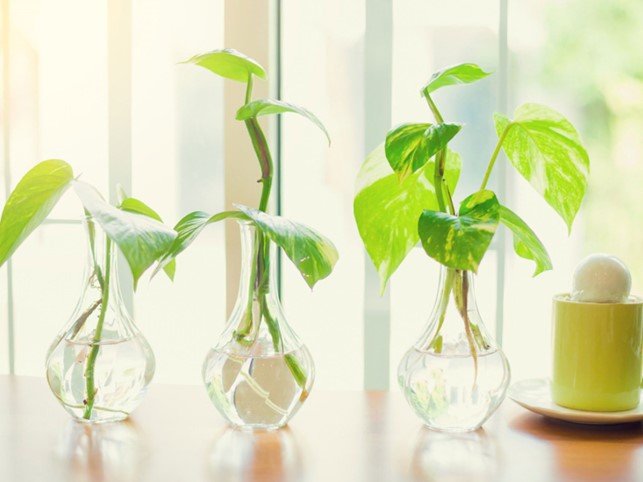
Pothos is a pretty, generous houseplant that's very easy to grow. It combines beauty, versatility and a forgiving nature. Appreciated by amateur gardeners and collectors alike.
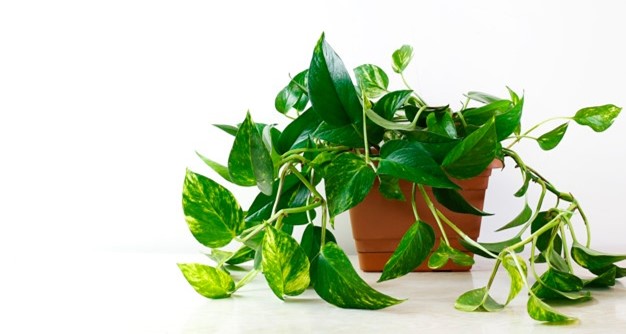
The pothos, sometimes called the devil's vine, is a highly decorative plant, climbing or drooping to suit your taste, with heart-shaped leaves. In a pot, it can grow to 2 m or more, if supported properly.
Origin of pothos
Pothos (from its Latin name epipremnum aureum or scindapsus aureus) belongs to the araceae family,
Native to the humid tropics of Australia, Southeast Asia and the Pacific islands, this liana can grow up to 20 m tall, twining and clinging by aerial roots to tree branches and other epiphytes.
In our colder climate, it thrives as a houseplant. Ideal if you're looking for an indoor jungle feel. Its green foliage will occupy several visual levels in your space. The plant can just as easily climb up a moss-covered flagpole or cascade from the top of a shelf or pendant.

Pothos varieties
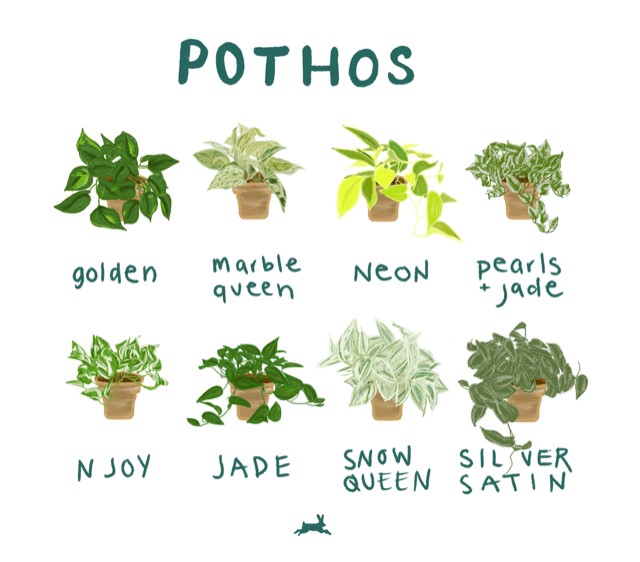
Pothos comprises some forty species, some very similar to certain philodendrons. Interesting cultivars include :
- Pothos Golden Queen: foliage and stems strongly variegated with golden yellow. The best-known species.
- Pothos Marble Queen: creamy-white foliage variegated with green (like marbling).
- Pothos Neon: yellow foliage
- Pothos Jade: dark green foliage (requires less light than all the others)
- Pothos N'Joy: soft green with large white spots - needs plenty of light to keep its pure white color.

How to care for a potted pothos?
Easy to grow, the pothos enjoys fairly rapid growth, and some varieties can reach attractive proportions when fully grown: up to 1m high and wide. It likes humidity and warmth, so adapts well to the temperature of our homes. However, avoid placing it near a radiator, which dries out the air.
☀ Light
Pothos appreciates light but not direct sunlight. It does, however, tolerate less bright exposures, but its foliage will be less spectacular.

💧 Watering and maintenance
Water moderately and regularly. Reduce watering in winter. Clean leaves regularly with a cloth soaked in lime-free water. Cut back drooping stems in spring to restore vigor and encourage branching.
🌡️ Temperature
This tropical plant appreciates the ambient temperature of our homes (between 18° and 24°). You can take it outside in summer, but bring it inside as soon as temperatures drop below 15°. Pothos fears draughts.
☠️ Toxicity
Pothos is known to be toxic to dogs and cats due to the presence of insoluble calcium oxalate.
🦟 Diseases, pests and parasites
It has no known diseases or parasites. Only over-watering, draughts or unsuitable temperatures can harm it.
🗑 Potting and multiplication
Repotting: repot every spring.
Propagation: Pothos is easily propagated by cuttings in spring. Locate the root nodes on the stem, just below the junction of leaves or branches. These tiny bumps are the key to pothos propagation. Place cuttings in water until roots form, then replant in soil.