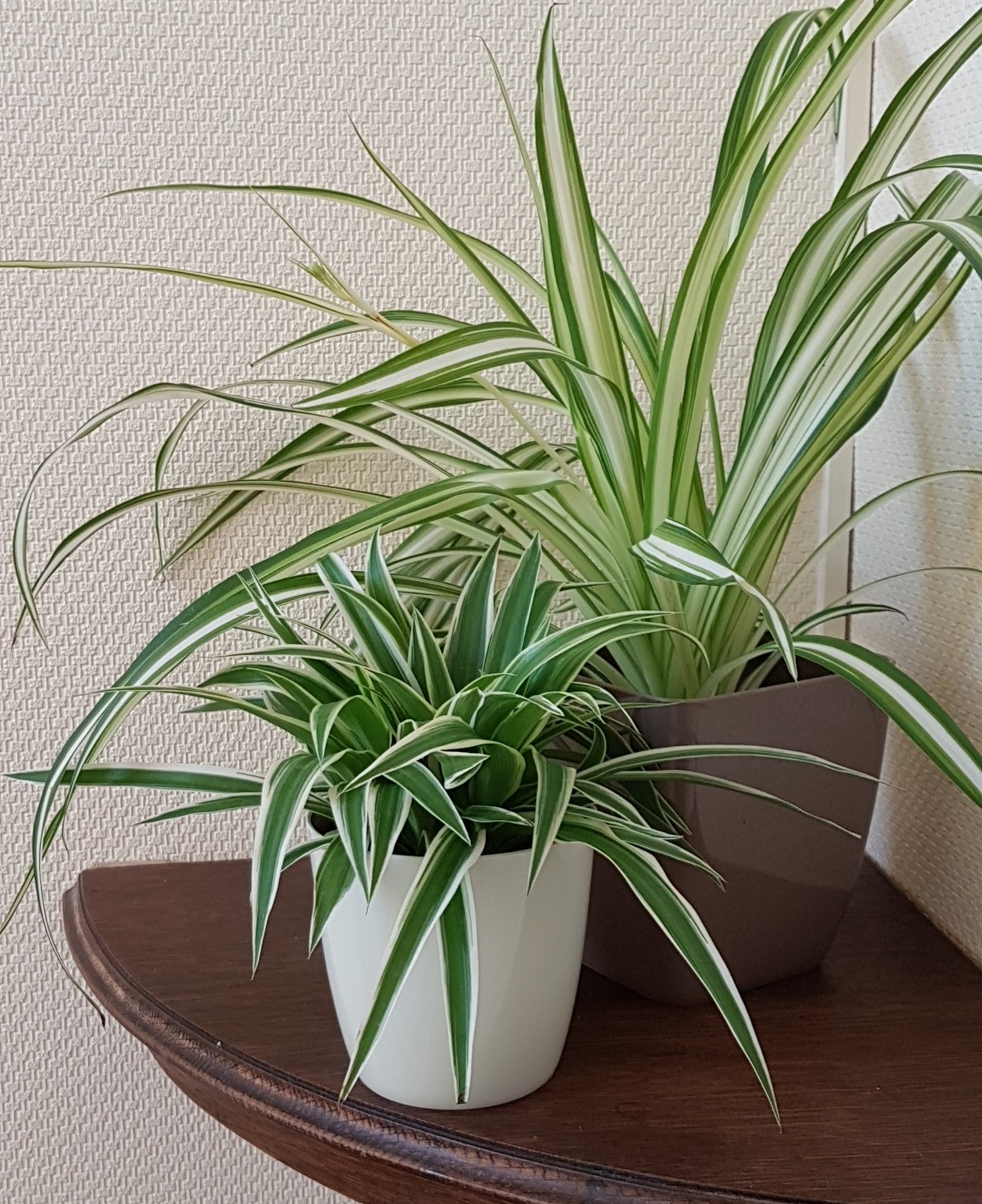
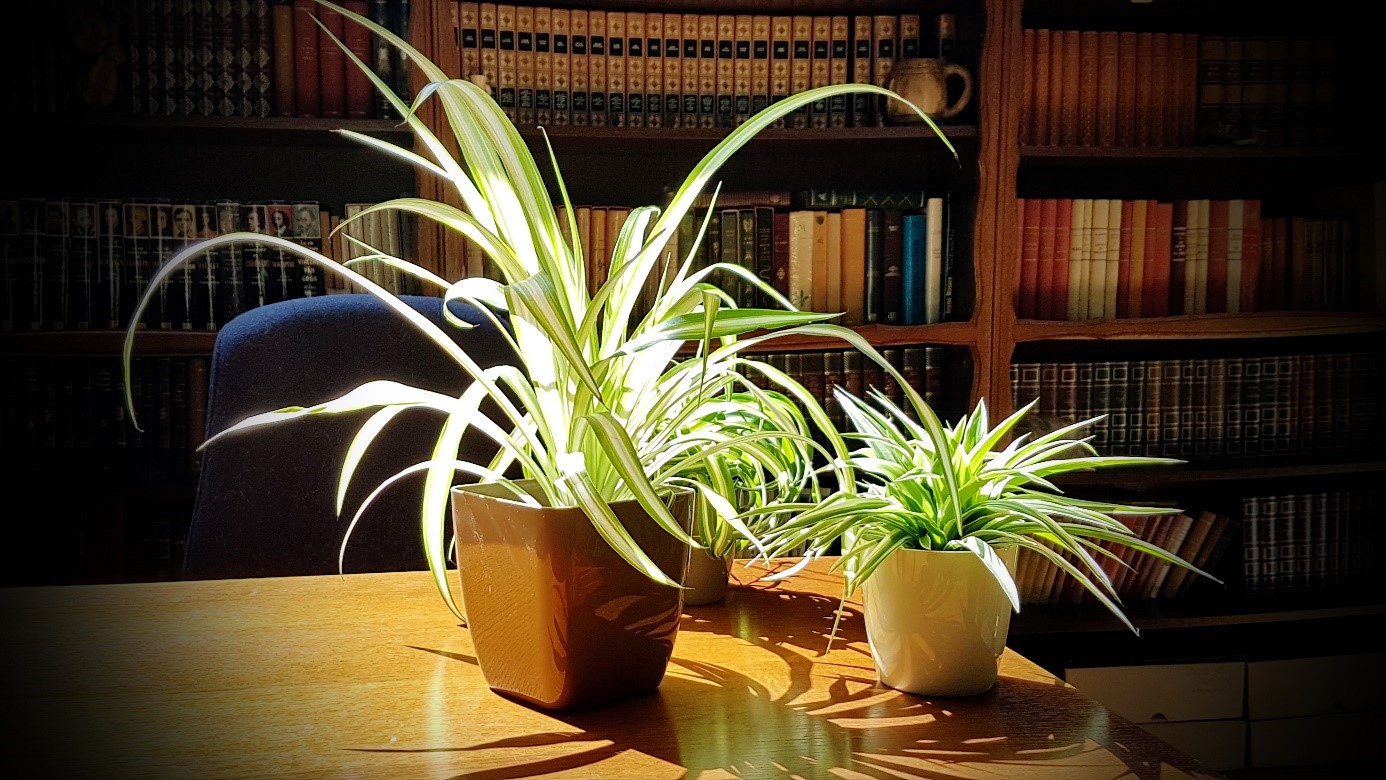
Chlorophytum, often called the spider plant, is easy to care for. Its graphic, variegated foliage is perfect for both home and office, on a window sill or as a hanging plant.
Origin of chlorophytum
Chlorophytum is originally a ground cover plant found in the tropical forests of South Africa. It appeared in our homes in the 19th century.
This elegant plant, with its drooping habit and long, usually two-toned leaves, gets its nickname (spider plant) from its stolons (aerial stems that take root, producing new plants), which resemble small spiders with small, graceful but short-lived white flowers in spring and summer.

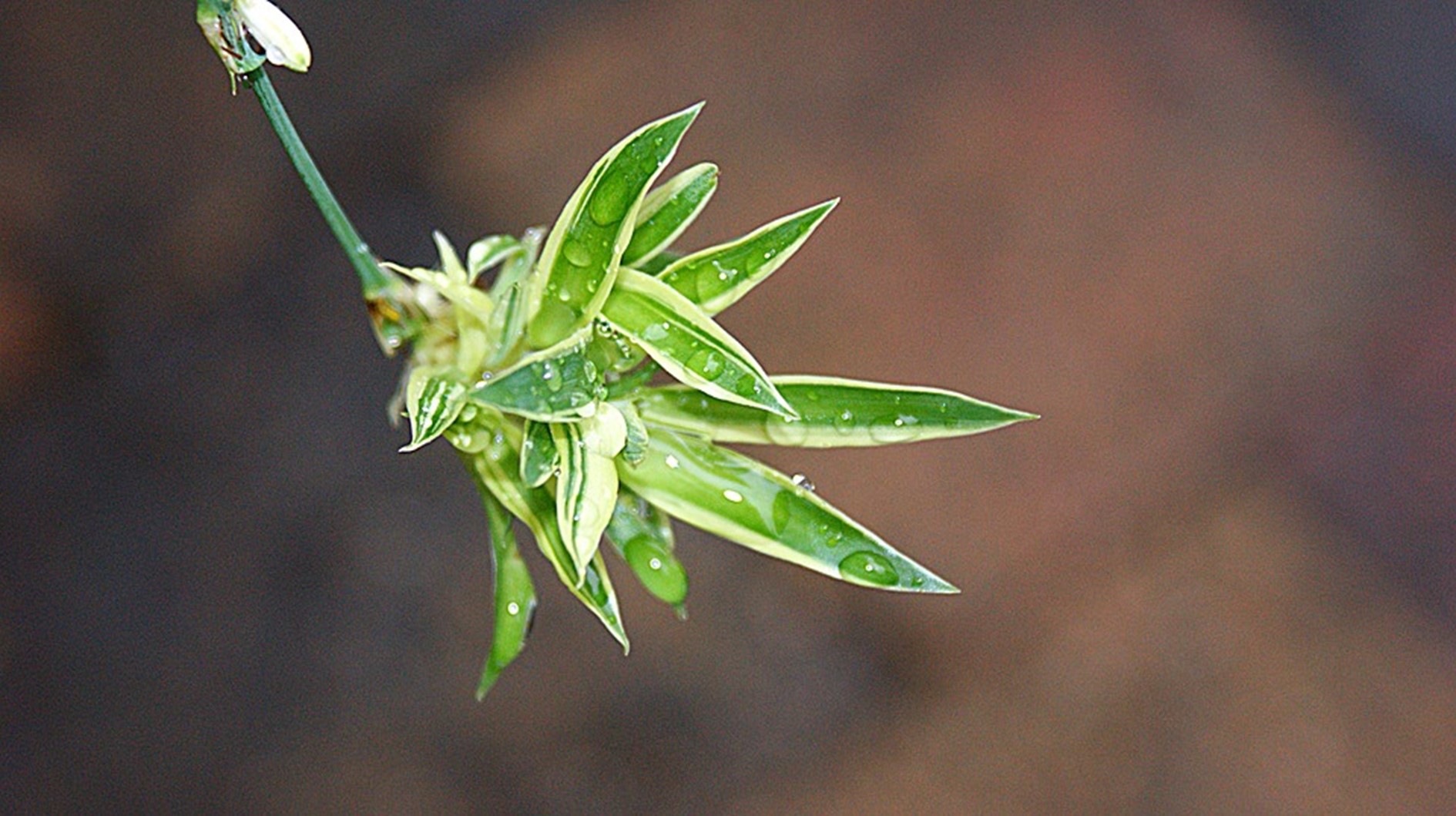
Once very popular, then gradually forgotten, chlorophytum is now enjoying a resurgence of interest. Indeed, its depolluting properties make it a perfect candidate for cleaning up our interiors.
Research conducted by NASA has revealed that chlorophytum plants have the ability to purify the air. The plant can eliminate up to 90% of potentially toxic chemicals circulating in the air.
Chlorophytum is best planted high up, to show off its stolons, which fall back nicely. Leaves do not exceed 30 to 40cm in length, but the runners can fall well below the plant.
The humid environment of a bathroom suits it well, but it can easily withstand most of the conditions of our dry, overheated homes.
Types of spider plants
South Africa's tropical rainforest is home to over 65 different species of spider plant. Only a handful have made it to our shores. The varieties most often found in garden centers are the following:
Chlorophytum Comosum ‘Variegatum’
This is the most common form, with striated leaves. The center of each leaf is cream, while the outline is forest green. The plant has great charm and fills a room well.

Chlorophytum Comosum “Ocean”
A variety with shorter, broader leaves edged in white.

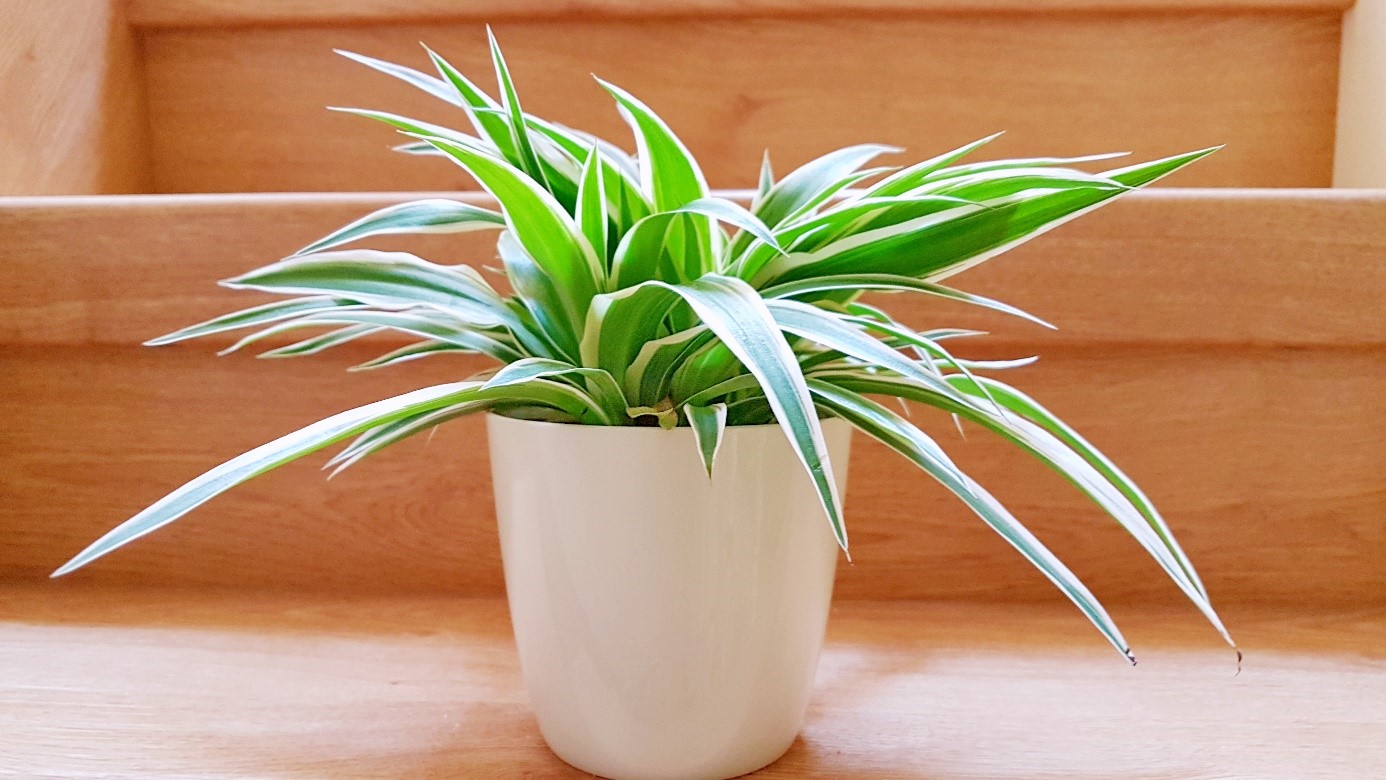
Chlorophytum “Bonnie”
This variety of spider plant unfurls variegated leaves that curl in on themselves. Harder to find than "variegatum".

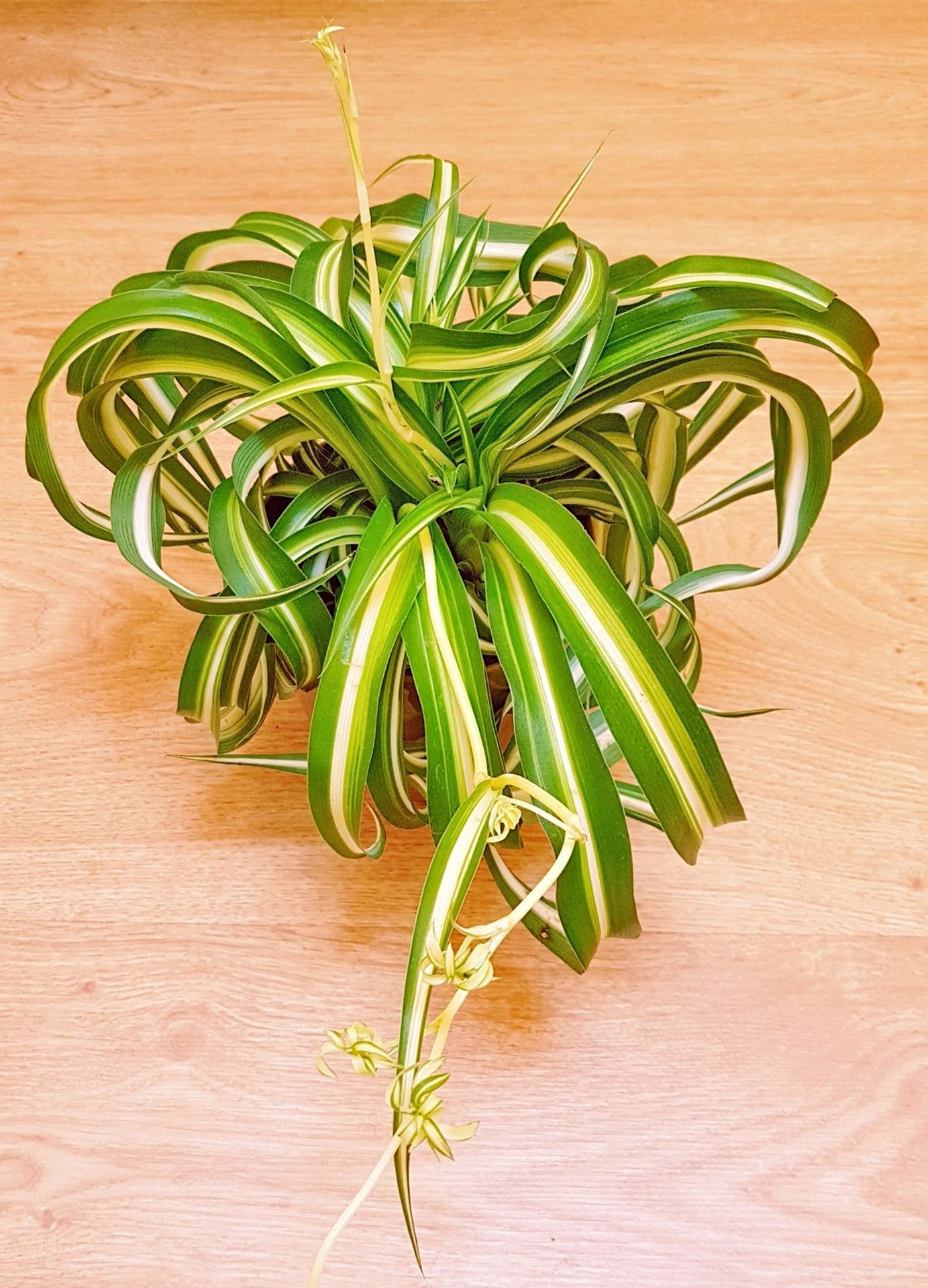
Which Garden ID pot for your chlorophytum?
But you can also use Star Air hanging baskets (20 cm) or the Shiny range (round pots from 11 to 35 cm diameter or square pots from 13 to 20 cm).

How to care for a chlorophytum?
Very easy to live with and grow, this houseplant is content with little, but still needs a minimum of attention to thrive.
☀ Light
Although not fussy, spider plants thrive best in light (but not direct sunlight). They love window sills. In fine weather, you can take them outside to enhance the green color of the foliage.
💧 Watering
Water regularly but sparingly. It will stand forgotten watering better than soggy soil. But as it appreciates humidity, spray it from time to time. Fertilize twice a month from early spring to early autumn.
🌡️ Temperature
Chlorophytum thrives at indoor temperatures. However, it will appreciate being moistened to prevent it drying out. Airing or taking the plant outside in summer will do it a world of good.
☠️ Toxicity
The plant is claimed to be non-toxic, but it can potentially be harmful to cats, and if eaten can cause stomach upset and vomiting.
🦟 Diseases, pests and parasites
Pests: Few pest problems.
Problems: if the tips of the leaves dry out and turn brown, this is usually a sign that the air is too dry. Spray the leaves regularly. On the other hand, brown spots in the heart of the plant are a sign of excess water. And if the leaves lose their shine, it's often due to a lack of light or fertilizer.
🗑 Potting and propagation
Re-potting: Re-pot as soon as the roots occupy all the space and overflow the pot. Generally once a year, preferably in spring.
Multiplication: chlorophytum produces a large number of stolons on which new seedlings develop. All you have to do is replant them.